


New Deputy CEO Post announced
Deputy CEO Role
Following the huge success of the mch.london virtual boat race we are thrilled to announce that we are recruiting for a Deputy Chief Executive.
Key info:
| Reporting to: | CEO |
| Time required: | Part time, 16 hours a week – flexible |
| Salary: | £20,800 (£52,000 p.a. pro rata) |
| Contract: | 1 year – further years dependent on funding |
| Location: | Home based with travel |
| Deadline: | 5pm 22 July |
Summary of Role
Power2Inspire is at the cusp of a period of significant growth. We need a dynamic, self-motivating leader with the vision to take the charity into the future as the current (voluntary) CEO winds down his work. This role provides the ideal opportunity to gain the training and experience over a period of 2 to 4 years, to become the CEO.
Finances dictate the scope of the role: currently we have sufficient resources to engage for a fixed term of 1 year based on a flexible 16 hours a week. A major part of the role will be to work with the charity’s newly appointed fundraiser to secure funding for continuing this fixed term contract and hopefully making it a permanent full-time role.
The charity recently organised the hugely successful mch.london virtual boat race. This showcased inclusive sport, raised the profile of the charity and raised the money to enable the charity to fund this Deputy CEO post. The Deputy CEO will be expected to lead the growth in the charity’s brand afforded by the virtual boat race through social media and press, and assist in organising the second iteration of the race, and in securing enough from sponsorship and donations to help finance a continuation of this contract.


Key Responsibilities
- Organise the charity’s activities
- Develop (in conjunction with the current CEO and board) further the vision, mission and strategy for the growth of the charity (a five-year plan), with a view to implementing it as the current CEO steps down into retirement
- Manage a dynamic and young team of volunteers and any paid staff
- Assist with the implementation of the new fundraising strategy, being primarily responsible for bid writing
- Oversee the implementation of a new marketing and PR strategy, including managing interns or volunteers engaged for the purpose
- Take on part of the bookkeeping and banking requirements as agreed by the CEO and board
Operations
- Organise the booking and delivery of our PowerHouseGames, to include
- Liaising with schools, universities and community groups;
- Vetting, booking and liaising with coaches and volunteers (including the CEO) to deliver these activities;
- Ensuring monitoring and evaluation processes for before and after the activities are presented, completed and returned and arrange for the evaluation of the resulting data;
- Working with the CEO to arrange funding and payment for these PowerHouseGames;
- Assisting the CEO in recruiting corporates to support and participate in the university PowerHouseGames;
- Assist the CEO (and others) in the supervision, monitoring and reporting of the Community PowerHouseGames, both online and in libraries (when permitted);
- Assist in the organising of the charity’s festivals of inclusive sport, to include
- Possibly tennis, badminton, golf and inclusive run/walk/wheel sensory 1K;
- Liaising with the venue organisers, coaches and volunteers needed to run each event;
- Assist with the organisation of the second virtual boat race, including being responsible for the media, social media and publicity for the event;
- Support the CEO in delivering assemblies to schools (probably online during the pandemic) including marketing to schools and booking dates with them.
Financial and Fundraising
- To work with the CEO and the trustee responsible for overseeing the charity’s finances, to establish and implement the best division of the charity’s bookkeeping, payments and financial recording tasks and responsibilities;
- To work with the CEO and recently appointed (volunteer) Head of Fundraising to establish a modus operandi for fundraising, to include
- Bid writing
- Corporate sponsorship and partnership
- Fundraising challenges and events
- Scanning for potential funding streams
Strategy and Growth
- To assist the CEO in implementing the Trustees’ current strategy and growth plans;
- With the CEO and the board develop further the vision, mission and strategy to grow the charity as the current CEO gradually steps down – currently planned as a three to five-year process.

Staff and Volunteers
- To manage all the charity’s paid staff and volunteers (excluding the current CEO and trustees) including ensuring
- All policies are up to date
- Recruitment and induction processes are implemented
- The DBS checks required by the charity are obtained
- Complaints, enquiries, safeguarding reporting are dealt with appropriately.
Reporting
- To assist (with a view to taking over) the reporting, evaluation and monitoring required by the board, funders and/or donors.
Marketing
- To work with the CEO to establish a modus operandi for marketing, to include
- Liaising with schools, in the state, independent and SEN sectors, to promote the PowerHouseGames,
- Liaising with universities to promote the University PowerHouseGames model
- To supervise any staff, volunteers or outside agencies in their promotion of the charity through social or press or other media.
Other
- To undertake all reasonable tasks considered necessary by the CEO and the Board, commensurate with the role, the fixed term and part time nature of the contract.
Person Specification
As well as your CV, we ask you to submit a covering letter explaining how your personal, academic and work experience show that you will be well suited to the role. Below is the role’s Person Specification. Please address each item and use real life examples of times you have shown that you meet the required skill or experience.
Essential Criteria
- Visionary, with a desire to grow into the CEO role
- Knowledge of at least one of:- the sports sector, disabled sports sector, schools and/or university sports sector, community sports (particularly inclusive sports) sector;
- Organisational skills, particularly of events with younger people
- Business and financial acumen and management experience
- Leadership skills – with experience of successfully leading a team
- Knowledge of fundraising, particularly bid writing
- A clear demonstration of commitment to and interest in the charity sector
- An enthusiasm for growing the charity and for developing new projects
- Excellent written communication skills, including the ability to write persuasively and for a variety of different audiences
- A sharp attention to detail, producing dependable and accurate work
- An ability to use initiative, think for yourself and argue your case
- Enthusiasm, energy and ability to fulfil the role
- Proficient in IT including using Microsoft Word, PowerPoint and Excel. Also, a fast learner of new IT packages and software with a working knowledge of a bookkeeping software program – the charity uses Xero
Desired Criteria
- Experience of dealing with the press, media and social media
- Experience of marketing
- Experience of working with disabled people, in a health environment or in sport
- Knowledge of fundraising databases, and monitoring and evaluation
- Knowledge of HR from a management perspective
To apply, click the button, fill in your details and upload your CV and a covering letter explaining how you meet the Person Specification. Please feel free to use each item on the Person Specification as a heading and explain with real life examples how your experience showcases the skills required.


A trustee's view: Vanessa joins the board
A trustee's view
On a bright September morning I arrived at Cambridge University’s gym for my first PowerHouseGames. Although I’ve played sports competitively since my early teens, having never been to a PHG before I was slightly nervous but excited to see what the day was all about.
When John arrived with all the kit, it was amazing to realise how little was really needed to make such a big difference to the kids and students participating. I had been used to rowing and cycling events, with lots of teams assembling boats & bikes, so knowing that so much could be done mainly by having people involved was great.
As we set up I was intrigued to see how the different games worked – being notoriously bad at throwing I thought I could finally redeem myself with some new age kurling! As the different participants started to arrive from schools and Cambridge University I was really curious to see how all the participants may interact, remembering the nerves of being a child around lots of new people and the fear of not being included, especially in sports, so it was amazing to see how easily all the participants interacted with each other and helped each other. They were all split up into teams with different coloured t-shirts and the games began!
When I was at school all sport that I participated in was competitive and it was about being as good as you could be. This was something that made me not want to try out new sports. I knew what I was good at but the pressure that was always placed on winning so I stuck to what I knew rather than trying new sports. That is what made watching everyone get involved for the fun of playing rather than to be competitive so incredible. Everyone seemed so welcoming and comfortable to get involved and there was no weight put on winning, just who was having the most fun.
Spending the morning at my first PowerHouseGames was really eye opening to the incredible work that Power2Inspire does and is the reason I wanted to become a trustee. P2I is one of the few fully inclusive sports charities, that allows everybody to play no matter their ability. As a society we have become more isolated and sedentary. Unfortunately, that fear to try something different or get involved, means that more and more people don’t. We stay at home where we feel comfortable because people don’t want to risk not feeling included or good enough to be a part of the team, which unfortunately creates unhealthier lifestyles and poorer mental wellbeing. That’s why it’s important that we try to change that, putting a focus on getting everyone involved and enjoying themselves, something that the PowerHouseGames and their founder, John exemplifies.
Anyone who has met John (the founder) will understand why I wanted to become a trustee of P2I. His positive attitude and real passion for bringing sports into everyone’s life is truly inspiring. John was born without fully formed arms or legs and was often ‘left on the bench’ in sports at school. We often talk about how ridiculous it is that he failed his swimming exam at school because he couldn’t dive to the bottom of the pool – a clear demonstration that people don’t always find ways to adapt sports for everyone.
I spent much of my teens and early 20s rowing competitively and since then have become a triathlete (albeit not a very fast one!). Sport is a really important part of my life and I have been lucky enough to see the positive impact firsthand. For me it’s really important that everyone has the opportunity to take part – whether that’s within a wider group or as an individual, so they can get the same joy and positivity that I have been lucky enough to experience through my own involvement in sport. That’s why I became a trustee of P2I, as I know if we can expand its reach and get more people experiencing the benefits then we are really making a positive difference.
So please Volunteer, Donate or Fundraise with me!

Little Thetford Primary School - talks to start Science Week
Gadgets to inspire - a start to British Science Week at Little Thetford Church of England Primary School
This charming school, tucked into the fens between Cambridge and Ely, welcomed our John Willis to start their Science Week with an exploration of the gadgets he uses to overcome the barriers he faces in everyday life.
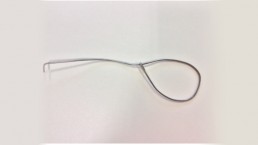
John demonstrated how he eats – messily when he first learned the art of flicking ice cream into his mouth! ; how he dresses, with his low-tech but invaluable hook (see image above); how he drives; and how he walks, with his robot-like feet. The four classes each had a different presentation and were able to ask questions according to their age, from “How do you brush your teeth?” through to “How to you go to the toilet?!”
John then showed off some of the equipment he used for his Road2Rio challenge in 2016: his artificial left arm and paddle for kayaking, his fencing foil, his badminton racket held by an artificial right hand, and a tennis racket.
They all liked learning how John swims. This was ably demonstrated by one of the teachers – see photo to the right – and captivated the pupils! With short arms (imitated by hands being on shoulders) and knees being kicked together (knees, not feet, as John has no feet) John lies on his back and pushes the water away. Slow but effective.
The children were enthralled and excited. It certainly sparked their imagination as they considered that there really is nothing we cannot do if we use our knowledge and practice and persevere.
The head teacher, Mr Wallace, made John most welcome and committed to a PowerHouseGames in the summer, if the funding could be found – we will make it happen!


Cambridge University Cricket Club PowerHouseGames 2020
University students bowl schools over with fun, inclusive sports!

The women and men of the Cambridge University Cricket Club came together to host the second CUCC PowerHouseGames on Friday 6th March at the University’s grand sports centre. They welcomed the Perse, back for their second outing, Netherhall School, here for their first, and regulars, Castle Special School.
Such was the impact that Netherhall signed up to return on Friday 13th March with a different cohort of students.
The cricket theme was popular – table cricket and kwik cricket proving very competitive, but the regular sports – boccia, walking football and new age kurling – were equally well loved. Sitting netball is fast becoming one of the most enjoyed and regarded as competitive and inclusive.
Some highlights: a very vigorous hitting of the tiny table cricket ball resulting in a broken bat; the enthusiasm of Laura Woodward (a volunteer from Mills & Reeve) as she supervised the sitting netball; and the amendment of the rules by our champion volunteer, Patrick Gosling, to level the field in kiwi cricket – any shot from a university player that hit the back wall was out, requiring a tip and ru mentality!

A big thanks to Dan Blackburn, our website guru, PA support, equipment supervisor, and now photographer – the photos here are all his! He also sorted out a new streamlined registration process – less paper, to go with the no-plastic-wrapping for our T-shirts in an attempt to be more environmentally conscious.
The feedback was great:
Andy Schofield, teacher at Netherhall had this to say: “My students loved the experience and did not stop talking about what they had done throughout the morning. They kept talking about the friends they had made and the people they were working with. It was fantastic!”
And a parent of a participant: “I am a teacher and head of house at Soham Village College. My son attended the PowerhouseGames with his schooll, and I think this would be a wonderful event for some of our students to be involved with.” We have signed them up for a future date!
And some quotes from the university students:
“Always a good event. Really helps bring the team together with the wider community.”
“Simply interacting with the children was incredibly fulfilling. Seeing positive reactions to attempts to engage and include them made for a very heart warming experience. Equally, it was good to see small improvements in their ability and desire to get involved as the day progressed.”
“As someone who was already involved in performance sport – as both athlete and and coach – I would now like to be involved with more initiatives like this.”
Feel like I’ve made a real difference to other people’s lives.”


Another fantastic event in this year’s PowerHouseGames with Cambridge University. If you would like your school, college, university or workplace to get involved and share in all the fun of a PowerHouseGames please do get in contact.

Motivation in lockdown
Motivation in lockdown
These strange times have led me to thinking how I can help, how I ordinarily cope with daily life and whether there are any lessons we can transfer to lighten the gloom.
I believe we all have a responsibility to inspire all those around us; and all of us have the power to do so. In fact, we cannot avoid this responsibility and gift. Anyone who is a parent knows the profound sense of responsibility of being a role model, brought vividly home when our children mimic our behaviour.
As an aside I must mention an anecdote from a trip pre-children. My wife and I were in Canada, hosted by friends with young ones. At a restaurant we couldn’t work out what their young boy was doing, until my wife realised he was trying to eat his supper – a pasta dish – using his elbows to grip the spoon, imitating me! It wasn’t going well and threatened a major mess. I had to point out that I had had a lifetime of experience of bringing my paws together. It was an early lesson that I would be copied by young people from then on.
We try to use this responsibility wisely – the best instil great values, are wonderful role models and inspire their offspring to be the best they can be. But it can work the other way around too: children inspire their parents, grandparents, teachers and elders. Who is not inspired by the young person videoed doing something kind, generous or moving?
So, inspiration is for all. I experienced a three-way version of this at a SEND school in the shadows of the old White Hart Lane, Tottenham’s former stadium. I attended to do one of my 50 1,000m swims as part of the 50:50:100 challenge. After I completed the 40 lengths in the 25m pool with the supporting company of about a dozen of the students, I was treated to lunch. Over a welcome sandwich I was chatting with the head teacher when one student, with quite severe impairments, came and spoke to us. What he said took about 3 minutes to say, such was his speech impediment, but he determinedly got through it: “Today, when I saw John swim in the deep end of the pool, I became inspired. I suddenly knew I could do it too. I went and did it for the first time in my life!” His grin was radiant.
His head teacher noted that the barrier to swimming in the deep end was due not to his (many) physical impairments or cognitive challenges, but to a mental block, that could be overcome. I could see he was inspired to challenge other barriers that hitherto this student had displayed – were they real or imagined? And I was inspired: completing the remainder of my 50 swims seemed far easier, far more purposeful.
During the “lockdown” I have been frequently asked how I am coping. In many ways my working life has not changed: I work from home in more normal circumstances so that is basically the same; I have the advantages of my family all being around – company for coffee breaks and lunch; and I have a mindset that says this is an opportunity, what can I be getting on with.
I have been exploring this mindset. My observation is that those who feel aggrieved at being restricted, are ‘grieving’ for the lost life that these 3 months (or however long we remain locked down) last. I say grieving because I see the “Five stages of grief” in many responses: denial, anger, depression, bargaining and acceptance. Being locked down means being denied the opportunity to do exams, play sport, go on holiday, gain promotion, graduate, the list is endless. And we have all seen those refusing to comply (denial), those angry for no apparent reason, the rise of mental health issues is well documented (depression), the bending of the rules (bargaining) and fabulous front-line service (acceptance).
I look back and realise that I grieved for 24 hours when our PowerHouseGames at the end of term (20thMarch) with the Cambridge University Football teams was cancelled due to school students being pulled out. I knew immediately what it would mean – that there would be no more PowerHouseGames until September at the earliest, because although this was before the lockdown, contact would be discouraged (even that recently we hadn’t learnt the term ‘social distancing’!) and our activities inevitably involve close proximity. I denied it for a few hours, harbouring hopes that we could somehow carry on; I railed against the unfairness of it and strangely that the NHS was being put ahead of us charities – anger is often irrational or unrelated; was depressed for 24 hours until I bargained with myself that I could complete all those back office tasks that I had put off for months. So, I accepted the situation and immediately started relishing the opportunities to ‘spring clean’ the charity’s processes, to learn new things (e.g. I had always struggled to make our Facebook page work the way it should) and get creative.
That led to our seat-based online classes being launched with Oak Activities. It required a willingness to move fast, to learn, and to adapt. And its success has been hugely rewarding.
But how was I able to deal with all these stages so quickly and before lockdown started? Here I believe my disability has helped. From a young age I was constantly confronted by situations where I was unable, not permitted or instructed not to participate. I learnt by the time I was 6 to cope, to adopt strategies to make the best of things. If I couldn’t play rugby, I could study it; if I couldn’t play cricket, I could be the school’s youngest ever and longest serving scorer for the 1st XI. I could play chess, so I made it my thing. I knew everything there was to know about the first division (there was no Premier League then) and that led to reading the paper and an interest in history. Wherever I could be equal or almost equal I would try. In simple terms, I made the very most of every situation I faced. Lockdown is therefore just another opportunity to practice this. And coping is I think mostly a state of mind.
In Viktor Frankl’s book, “Man’s Search for Meaning”, he describes the attitudes and behaviours of the guards and prisoners he witnessed in Nazi concentration camps and concluded that everyone ultimately has the ‘freedom to choose’. He describes prisoners giving away their last piece of bread, forgiving their abusive guards, or stealing from fellow inmates. However dire the circumstances only we can choose how to react. No one else can do it for us.
I have always taken comfort in this. Responding in the way I would like, not the way pain, selfishness, anger or hurt, tries to choose for me, is I believe a foundation stone on the way to a better and more fulfilling life. Choosing how to react to the lockdown is within our gift, however appalling our circumstances, however hard the external influences (pain, crying children, an annoying housemate) make reaching for that choice.
I urge people to look around and find something to draw inspiration from: a newspaper reporting on Captain Tom, a flower outside, the song of the birds, a table gifted to you or bought for a special reason. The opportunities are limitless: enjoy the time to think, imagine and please inspire someone close to do so too.
John Willis